 Save
Save The first time I tasted tom yum, I was sitting at a plastic table in Bangkok, sweat dripping down my face—partly from the heat, partly from the chilies. A bowl of this soup arrived steaming and impossibly fragrant, and I watched a local woman at the next table squeeze lime into hers without hesitation, her movements so casual and sure. I went home determined to recreate that exact moment, that balance of fire and brightness that made my mouth come alive.
Last winter, I made this soup for my neighbor who was under the weather, and she called me three days later asking for the recipe. Turns out her daughter requested it for dinner, then her son wanted seconds. Now whenever they smell lemongrass at the market, they text me a photo.
Ingredients
- Boneless, skinless chicken thighs or breasts (400 g, thinly sliced): Thighs stay more tender than breasts, but either works—just slice them thin so they cook quickly and evenly in the hot broth.
- Chicken stock (1.2 liters): Use a good quality stock; it's the foundation and deserves your attention, so don't reach for the bouillon cube.
- Lemongrass (2 stalks, trimmed and smashed): Bruise it hard to release those grassy, citrus oils that define tom yum—don't skip this step.
- Fresh galangal (4 slices, about 12 g) or dried (2 tsp): Fresh is warmer and more complex, but dried works when fresh isn't available; soak it briefly to soften.
- Makrut lime leaves (5, torn): These are non-negotiable—they bring a bitter, herbal note that layers beautifully under the heat and sourness.
- Birds eye chilies (4, lightly crushed): Lightly crush them to let heat infuse without overwhelming; adjust the amount based on your courage level.
- Mushrooms (150 g, sliced): Oyster mushrooms add earthiness, but button or cremini work fine and soften into the broth nicely.
- Tomatoes (2 medium, cut into wedges): Cherry tomatoes work too, though they collapse faster—use wedges to add body and subtle sweetness.
- Onion (1 small, sliced): A small onion so it softens without overpowering; red onion adds a hint of sweetness if you prefer.
- Garlic (3 cloves, smashed): Smash it to release flavor quickly into the broth rather than chopping.
- Fish sauce (3 tbsp): The umami backbone—don't be shy, but taste as you go since brands vary in intensity.
- Lime juice (2 tbsp fresh): Always fresh; bottled tastes flat and misses the bright pop you're chasing.
- Sugar (1 tsp): A pinch to balance the sourness and bring out the other flavors; adjust to your taste.
- Salt (½ tsp): Start here and taste before adding more; the fish sauce already brings saltiness.
- Fresh cilantro (2 tbsp, chopped): A handful scattered at the end brings fresh herbal notes that cut through the richness.
- Spring onions (1–2, thinly sliced): Raw and crisp, they add textural contrast and a mild onion bite.
- Extra lime wedges: For serving; let people adjust their own sourness to taste.
Tired of Takeout? 🥡
Get 10 meals you can make faster than delivery arrives. Seriously.
One email. No spam. Unsubscribe anytime.
Instructions
- Prepare Your Aromatics:
- Line up your lemongrass, galangal, and makrut lime leaves on a cutting board. Using the flat side of your knife, press down hard on each piece to bruise it—you should hear a crack and smell that unmistakable Thai soup aroma rise up. This is where the magic starts.
- Infuse the Broth:
- Bring your chicken stock to a rolling boil in a large pot, then add all your bruised aromatics along with the crushed chilies and smashed garlic. Let it simmer uncovered for 5 minutes without the chicken yet—this gives the broth time to absorb all those fragrant oils and spices. You'll notice the broth darkening slightly and becoming aromatic.
- Cook the Chicken:
- Slip your thinly sliced chicken and onion into the simmering broth and let them cook for 8 to 10 minutes, skimming off any foam that rises to the top with a spoon. The chicken should turn pale and opaque, and the onion will become translucent and soft.
- Add the Vegetables:
- Now scatter in your sliced mushrooms and tomato wedges, letting them soften for another 5 to 7 minutes until they're tender and the chicken is completely cooked through. The mushrooms will darken slightly and the tomatoes will begin to fall apart, which is exactly what you want.
- Season to Perfection:
- Stir in your fish sauce, fresh lime juice, sugar, and salt, then take a spoonful and taste it carefully. This is the moment to adjust—add more lime if you want brightness, more fish sauce for depth, or more chilies for heat. It should taste balanced: spicy, sour, salty, and slightly sweet all at once.
- Finish and Serve:
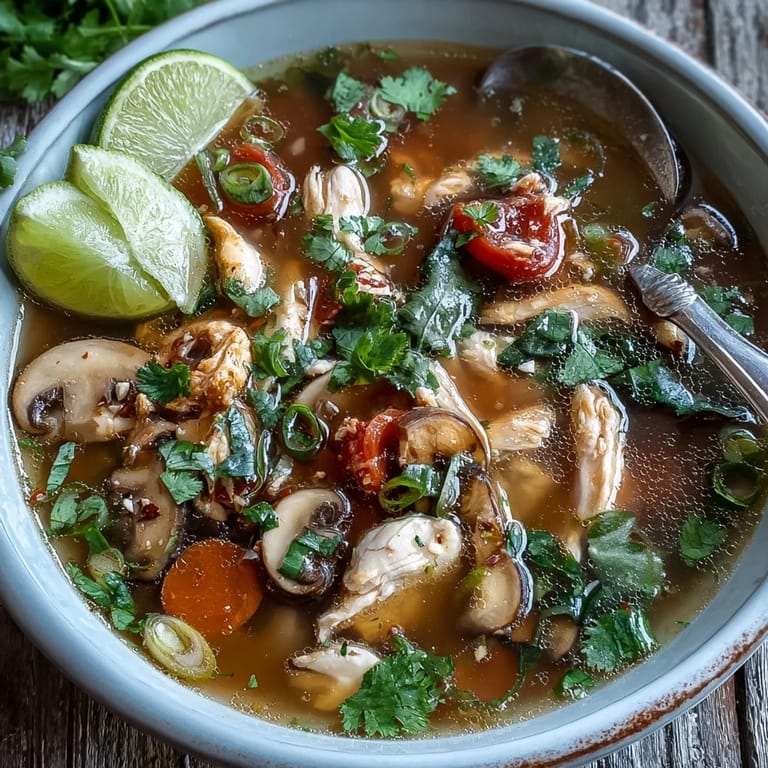
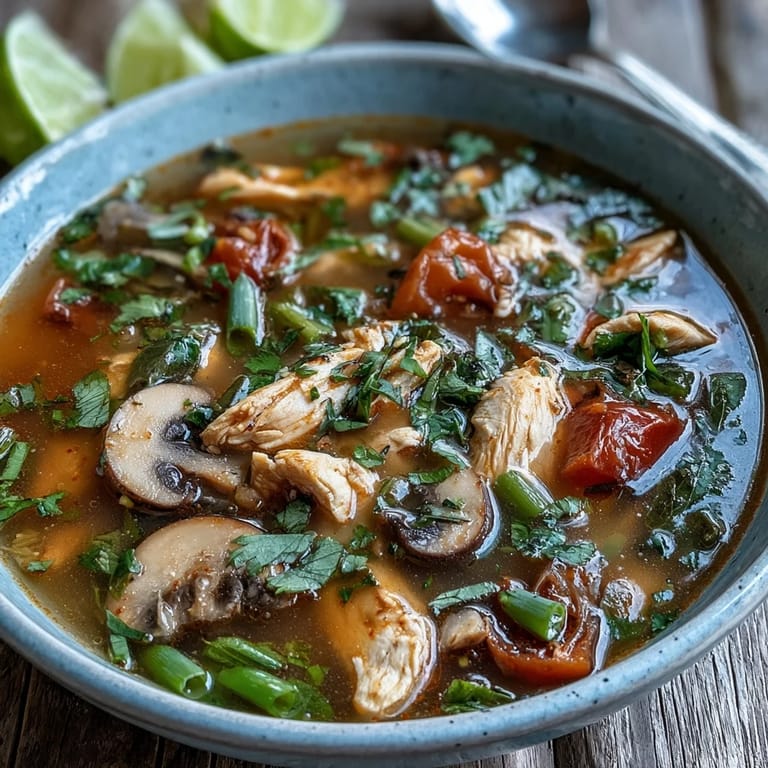
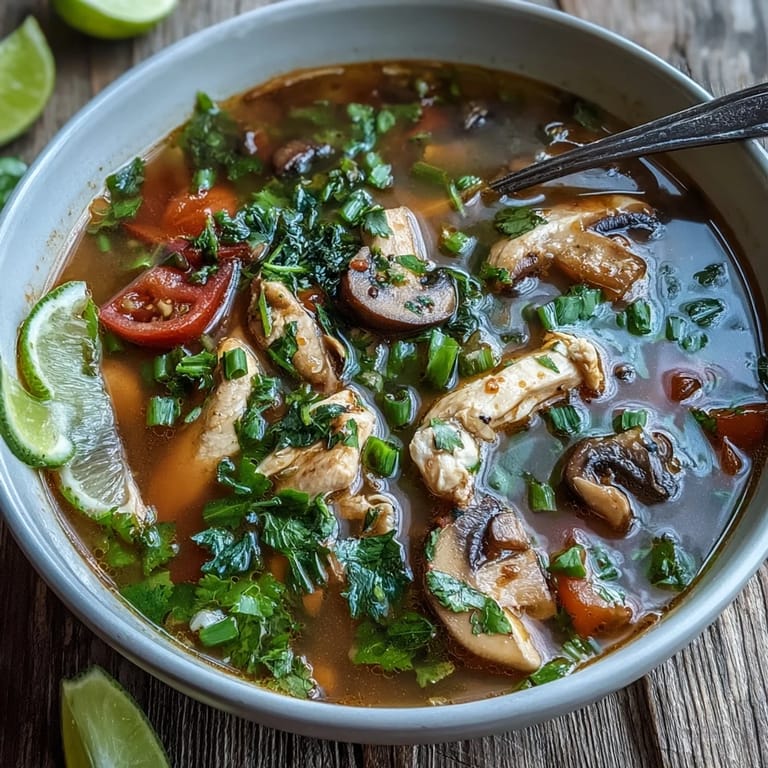
- Remove from heat and discard the lemongrass stalks, galangal slices, and makrut leaves if you prefer (or leave them for visual appeal and extra flavor). Ladle the soup into bowls and scatter cilantro and spring onions over the top, finishing with a lime wedge for squeezing.
 Save
Save There's a moment right after you add that lime juice, when you taste it and everything suddenly clicks into place—the heat, the sour, the aromatic herbs all speaking together. That moment never gets old.
The Heart of Tom Yum
Thai soup isn't really about the chicken or the vegetables—it's about the broth. I learned this watching my friend's grandmother cook in her kitchen in Chiang Mai, where she spent 20 minutes just preparing and bruising her aromatics before the stock even touched heat. She said the broth is where respect for the dish lives, and it's hard to argue when you taste something made that way.
Temperature and Timing
This soup comes together quickly once things hit the broth, which means you need everything prepped and ready before you start cooking. I learned this the hard way, standing over a pot with raw chicken in one hand and unmashed galangal in the other. Now I lay everything out like I'm about to perform, and the actual cooking feels like a dance rather than a scramble.
Playing with Heat
The beauty of tom yum is that it bends to your preferences without losing its soul. Some days I want it fierce enough to clear my sinuses, other days I let the sourness and herbs shine louder than the chilies. The soup respects both moods.
- For gentler heat, crush the chilies less aggressively or remove them before serving; for serious spice, add extra chilies or drizzle with chili oil at the table.
- You can swap chicken for shrimp (add it near the end so it doesn't overcook) or make it creamy by stirring in coconut milk just before serving.
- Serve it with jasmine rice if you want to soothe the heat, or eat it as a pure, straightforward soup that needs nothing else.
 Save
Save This soup has become the thing I make when I want to feel capable in the kitchen and feed someone something that matters. It's not complicated, but it teaches you to listen to flavors and trust your instincts.
Recipe Guide
- → How spicy is Tom Yum Chicken?
The heat level is customizable based on the number of birds eye chilies used. Four chilies provide medium-high spice, but you can reduce or increase them to suit your preference.
- → Can I make Tom Yum Chicken ahead of time?
Yes, the flavors actually develop and deepen when refrigerated overnight. Store in an airtight container for up to 3 days. Reheat gently on the stove.
- → What can I substitute for galangal?
Fresh galangal has a unique piney flavor. If unavailable, use dried galangal or a small amount of ginger combined with a pinch of cinnamon, though the flavor will differ slightly.
- → Is Tom Yum Chicken gluten-free?
Yes, when using gluten-free fish sauce and chicken stock. Always check labels to ensure your fish sauce contains no added wheat or barley-based ingredients.
- → Can I use other proteins?
Absolutely. Shrimp creates the classic Tom Yum Goong, while tofu works well for a vegetarian version. Adjust cooking times accordingly—shrimp needs only 3-4 minutes.
- → How do I achieve the perfect flavor balance?
Taste and adjust seasoning at the end. Add more lime juice for sourness, fish sauce for saltiness, or sugar to mellow excessive heat. The harmony of these three elements defines authentic Tom Yum.