 Save
Save There was a Tuesday evening when I had twenty minutes before a work call and a fridge full of random vegetables that needed using. I grabbed chicken thighs, dug out a bottle of mirin I'd bought months ago and never opened, and threw together what I thought would be a quick stir-fry. The smell of garlic and ginger hitting the hot pan made me cancel my takeout order mid-dial. That improvised bowl turned into this recipe, and now it's my weeknight rescue plan whenever I need something that feels special without the stress.
I made this for my neighbors during a power outage summer cookout on a portable burner, and they kept asking if I'd ordered it from somewhere. The cornstarch slurry trick I learned that night, watching the sauce go from thin to glossy in seconds, felt like unlocking a cheat code. Now I use it every time, and the chicken always comes out restaurant-shiny.
Ingredients
- Boneless, skinless chicken thighs or breasts (1.5 lbs): Thighs stay juicier and more forgiving if you overcook them slightly, but breasts work if you watch the timer closely.
- Soy sauce (1/3 cup): This is the salty backbone of the teriyaki, so use a good quality one or go for low-sodium if you're cautious with salt.
- Mirin (1/4 cup): The sweet rice wine adds a gentle depth that sugar alone can't replicate, and a little bottle lasts forever in the fridge.
- Brown sugar (2 tbsp) and honey (2 tbsp): Together they create a caramelized sweetness that balances the soy without tasting like dessert.
- Rice vinegar (1 tbsp): Just enough acidity to keep the sauce from feeling heavy or one-note.
- Garlic (2 cloves, minced) and fresh ginger (1 tsp, grated): These two make the kitchen smell incredible and add warmth that dried spices can't match.
- Sesame oil (1 tsp): A tiny amount goes a long way, adding a nutty fragrance that ties everything together.
- Cornstarch slurry (1 tbsp cornstarch + 2 tbsp water): This is what transforms the sauce from watery to glossy and clingy in just a minute or two.
- Jasmine or short-grain white rice (2 cups): Jasmine is fluffy and fragrant, short-grain is sticky and comforting, both work beautifully as a base.
- Broccoli, carrots, red bell pepper, snap peas (1 cup each): These stay crisp-tender and colorful, but feel free to use whatever vegetables you have on hand.
- Vegetable oil (1 tbsp): Any neutral oil works for stir-frying without competing with the teriyaki flavor.
- Fresh pineapple (1 cup, diced): The juicy sweetness and slight tang brighten every bite and make the bowl feel tropical and fresh.
- Scallions (2 tbsp, sliced) and toasted sesame seeds (1 tsp): These little garnishes add crunch, color, and a final layer of flavor right before serving.
Tired of Takeout? 🥡
Get 10 meals you can make faster than delivery arrives. Seriously.
One email. No spam. Unsubscribe anytime.
Instructions
- Get the rice going:
- Rinse your rice under cold water until it runs clear to remove excess starch, then combine it with water and a pinch of salt in a saucepan. Bring it to a boil, reduce the heat to low, cover tightly, and let it simmer for 15 minutes before turning off the heat and leaving it covered for another 10 minutes to steam perfectly.
- Mix up the teriyaki sauce:
- In a small bowl, whisk together the soy sauce, mirin, brown sugar, honey, rice vinegar, minced garlic, grated ginger, and sesame oil until the sugar dissolves. The smell alone will make you hungry.
- Marinate the chicken:
- Toss your chicken pieces in a bowl with half of the teriyaki sauce, making sure every piece gets coated. Let it sit for at least 10 minutes while you prep the vegetables so the flavors can soak in.
- Stir-fry the vegetables:
- Heat vegetable oil in a large skillet or wok over medium-high heat until it shimmers, then add the broccoli, carrots, bell pepper, and snap peas. Stir-fry for 3 to 4 minutes until they're crisp-tender and still bright, then remove them and set aside.
- Cook the chicken until golden:
- In the same pan, add the marinated chicken and cook for 6 to 8 minutes, stirring occasionally, until it's browned on the edges and cooked through. The pan will sizzle and the chicken will pick up those caramelized bits left behind.
- Thicken the sauce to a glaze:
- Pour the remaining teriyaki sauce into the pan with the chicken, then stir together the cornstarch and water to make a slurry. Add the slurry to the sauce and simmer for 2 to 3 minutes, watching it turn thick, shiny, and perfect.
- Build your bowls:
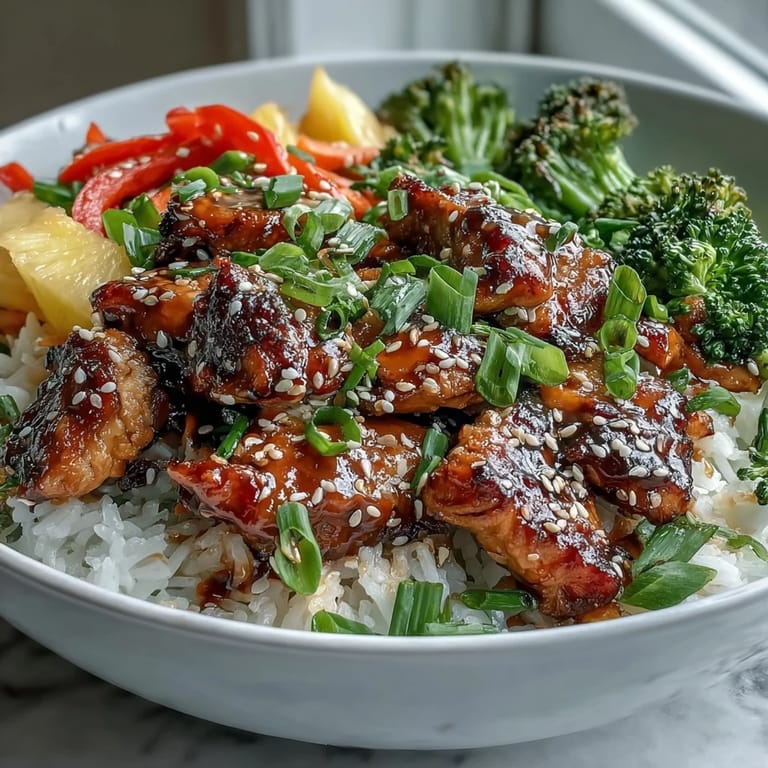
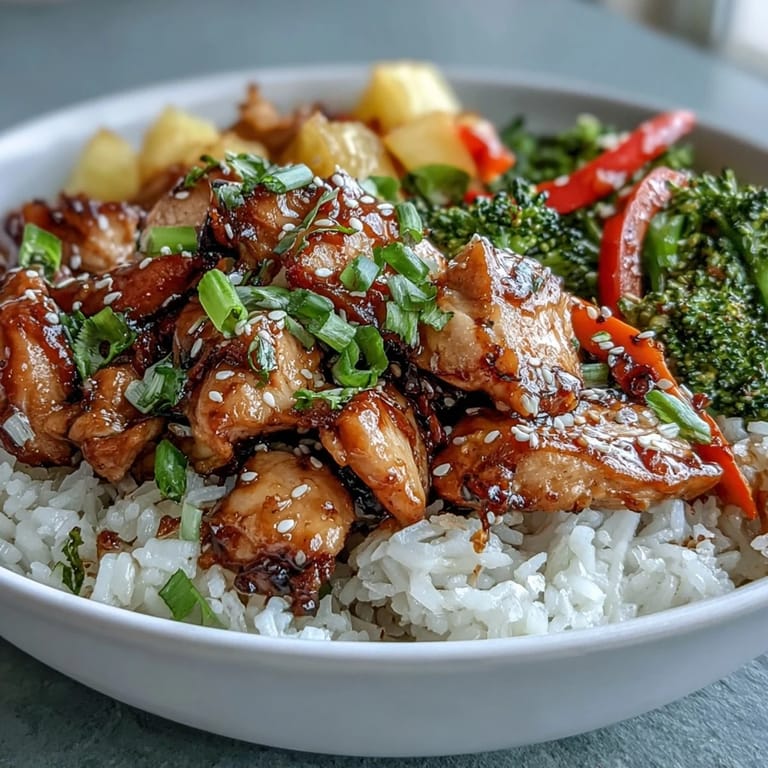
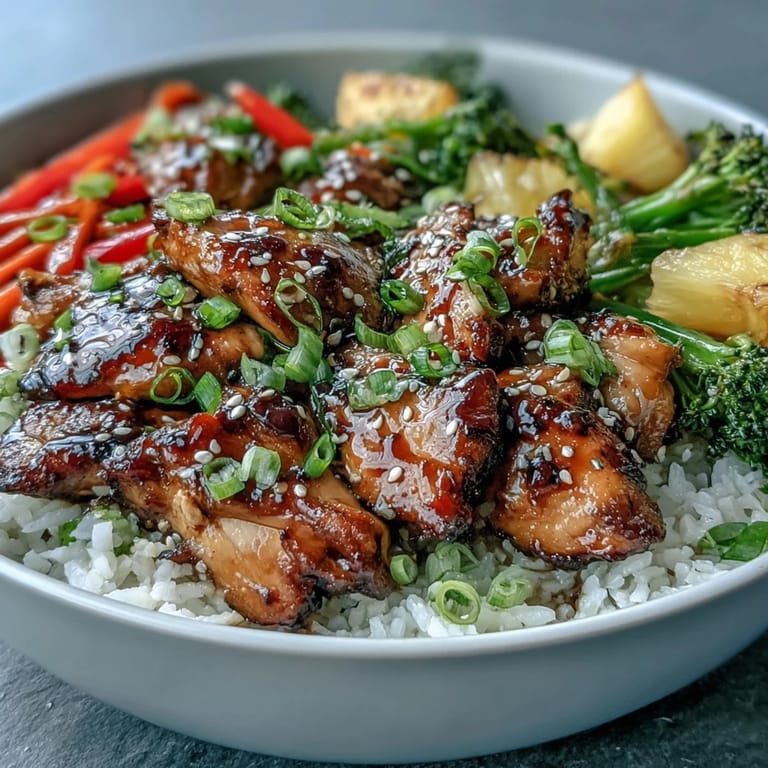
- Fluff the cooked rice with a fork and divide it among four bowls, then top with the glazed chicken, sautéed vegetables, and diced pineapple. Finish with a sprinkle of sliced scallions and toasted sesame seeds for that final touch.
 Save
Save The first time I served this to my sister, she ate two bowls and took photos for her group chat before asking for the recipe. Watching her pile on extra pineapple and sesame seeds reminded me that the best recipes are the ones people actually want to make again. It's become our shared language for catching up over dinner, no reservations required.
Making It Your Own
You can easily swap the chicken for tofu, tempeh, or even shrimp if that's what you have or prefer. I've made vegetarian versions by pressing firm tofu, cutting it into cubes, and cooking it the same way, and it soaks up the teriyaki glaze just as well. If you want more heat, a drizzle of sriracha or chili oil on top adds a spicy kick without overwhelming the sweet-savory balance.
Vegetable Flexibility
The vegetable mix is completely adaptable based on what's in season or what needs to be used up. Mushrooms, zucchini, baby corn, or bok choy all work beautifully in this bowl. Just keep the cook time short so everything stays crisp and colorful, and don't be afraid to mix and match based on what looks good at the market.
Storage and Leftovers
Leftovers keep well in the fridge for up to three days, and they reheat beautifully in a skillet or microwave. I like to store the rice, chicken, and vegetables separately so nothing gets soggy, then assemble fresh bowls as needed. The pineapple is best added fresh right before eating to keep it juicy and bright.
- Reheat the chicken and sauce together in a skillet over medium heat to keep the glaze glossy.
- Refresh the rice with a splash of water and a quick steam to bring back its fluffiness.
- Add fresh garnishes each time you serve to make leftovers feel just as exciting as the first bowl.
 Save
Save This bowl has saved me on countless busy weeknights and impressed guests more times than I can count. It's proof that you don't need complicated techniques or hard-to-find ingredients to make something that feels generous, colorful, and absolutely delicious.
Recipe Guide
- → Can I use chicken breasts instead of thighs?
Yes, chicken breasts work well though they're leaner than thighs. Cut them into similar bite-sized pieces and adjust cooking time to 5-6 minutes to prevent drying out. The teriyaki glaze helps keep the meat moist throughout cooking.
- → What's the best substitute for mirin?
Dry sherry or white wine vinegar with a pinch of sugar makes a good mirin substitute. For each tablespoon of mirin, use one tablespoon of sherry or one teaspoon vinegar plus half teaspoon sugar to maintain the sweet balance.
- → How do I store leftovers?
Keep components separate in airtight containers in the refrigerator for up to three days. Reheat the chicken and vegetables gently in a skillet, adding a splash of water to loosen the sauce. Warm the rice in the microwave with a damp paper towel.
- → Can I make this gluten-free?
Absolutely. Use tamari or certified gluten-free soy sauce in place of regular soy sauce. Double-check that your mirin is gluten-free, though most brands naturally are. The cornstarch thickener is naturally gluten-free as well.
- → What other proteins work with this teriyaki glaze?
Salmon fillets, shrimp, or beef strips all pair beautifully with this teriyaki sauce. For vegetarians, firm tofu cubes or tempeh absorb the flavors wonderfully. Adjust cooking times accordingly—salmon needs about 8 minutes, shrimp 3-4 minutes, and tofu 5-6 minutes.
- → Can I prep this ahead?
Cut vegetables and mix the teriyaki sauce up to two days in advance. Store sauce in the refrigerator and veggies in a sealed container. The chicken can be marinated overnight for deeper flavor. Cook everything fresh for the best texture and presentation.