 Save
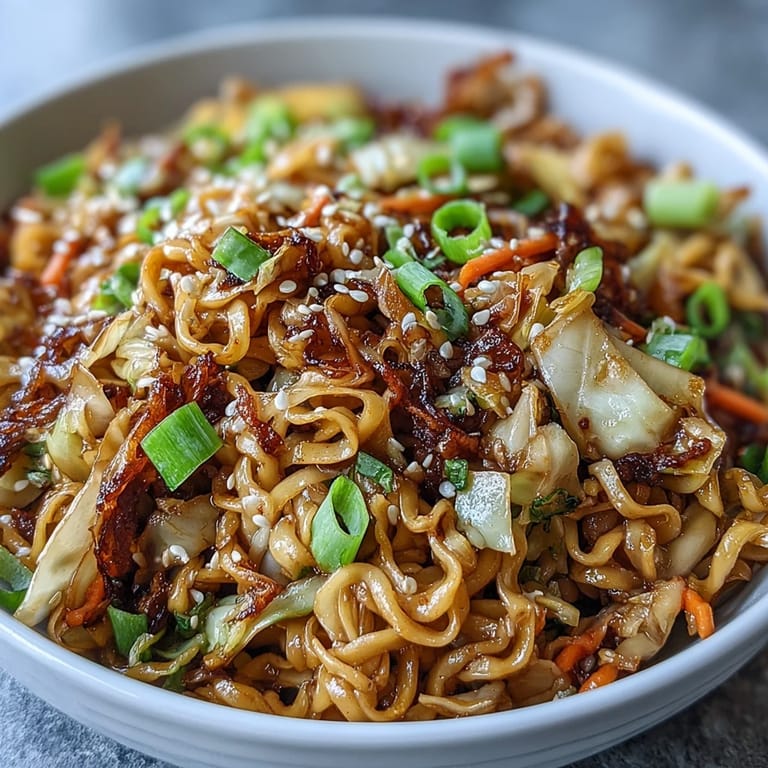
Save There's something wonderfully unplanned about weeknight cooking that leads to the best discoveries. One Tuesday after work, I had half a head of cabbage softening in my crisper drawer and a craving for something warm and textured. I pulled out a couple of ramen packs, some vegetables I had lying around, and threw together a sauce on instinct. Twenty-five minutes later, I was twirling noodles through caramelized cabbage, the kitchen smelling like toasted sesame and garlic, and suddenly my hastily assembled dinner felt like the kind of meal worth making again and again.
I made this for my roommate on a cold February evening when we were both depleted from the week. She sat at the kitchen counter while I worked the wok, and the moment the sauce hit the hot noodles, the smell was so good she actually closed her eyes and smiled. That's when I knew this wasn't just a quick fix dinner—it was the kind of simple, honest food that brings people together without requiring a special occasion.
Ingredients
- Green cabbage, thinly sliced (3 cups, about 200 g): This is your star vegetable—it caramelizes beautifully when high heat hits it, turning slightly sweet and nutty at the edges while keeping a satisfying crunch in the center.
- Carrot, julienned (1 medium): The thin matchstick cut cooks quickly and adds natural sweetness that balances the salty sauce, plus a pop of color.
- Scallions, sliced, greens and whites separated (2): The whites go into the pan early for depth, while the greens scattered on top at the end add a fresh, sharp bite.
- Garlic, minced (2 cloves): Don't skip the mincing step—you want it small enough to disappear into the oil and perfume the whole dish within seconds.
- Fresh ginger, grated (1 tablespoon): This gives the dish an underlying warmth and brightness that sesame oil alone cannot achieve.
- Instant ramen noodles (2 packs, about 160 g total): Discard those flavor packets and use the plain noodles—they're sturdy enough to toss without breaking and absorb the sauce perfectly.
- Soy sauce (2 tablespoons): The foundation of your sauce's savory depth; use a good quality one if you have it.
- Oyster sauce or mushroom sauce (1 tablespoon): This adds umami roundness that makes the dish feel richer and more complex than the sum of its parts.
- Toasted sesame oil (1 tablespoon): The toasted variety is crucial here—it has a deeper, more aromatic flavor that regular sesame oil won't deliver.
- Rice vinegar (1 teaspoon): A small amount cuts through the richness and keeps the sauce from feeling heavy.
- Sugar (1 teaspoon): Just enough to round out the flavors and balance the saltiness without making the dish sweet.
- Chili flakes, optional (1/2 teaspoon): Add this if you want a subtle heat that builds slowly rather than hits you all at once.
- Vegetable oil (2 tablespoons): Use a neutral oil with a high smoke point so it can get properly hot without burning.
Tired of Takeout? 🥡
Get 10 meals you can make faster than delivery arrives. Seriously.
One email. No spam. Unsubscribe anytime.
Instructions
- Boil and drain your noodles:
- Fill a pot with enough water to generously cover the ramen and bring it to a rolling boil. Drop in the noodles and follow the package timing exactly—usually around 3 to 4 minutes. Drain them in a strainer and set them aside, and here's the key: don't rinse them, because that starch will help the sauce cling.
- Whisk your sauce together:
- In a small bowl, combine the soy sauce, oyster sauce, sesame oil, rice vinegar, sugar, and chili flakes if using. Give it a good stir until the sugar dissolves and everything looks glossy and uniform. This step takes 30 seconds but changes everything.
- Get your pan blazing hot:
- Pour the vegetable oil into a large skillet or wok and set it over medium-high heat. You'll know it's ready when the oil is shimmering and moves easily across the pan—if you tilt it, the oil should ripple like water.
- Bloom your aromatics:
- Add the minced garlic, grated ginger, and the white parts of the scallions all at once. Stir constantly for exactly one minute—you're looking for that moment when the kitchen fills with an incredible fragrant cloud and the mixture starts to stick slightly to the bottom. This is when you know the flavors are waking up.
- Add your vegetables and let them dance:
- Toss in the sliced cabbage and julienned carrot and keep the heat high. Stir frequently for 4 to 5 minutes, letting the cabbage develop brown spots and become tender but still with some bite. If it starts sticking too much, lower the heat slightly, but resist the urge to add water—you want it to caramelize.
- Bring it all together:
- Add your cooked noodles to the skillet, then pour the sauce over everything. Using two utensils or a spatula and wooden spoon, toss and turn the noodles and vegetables continuously for 2 to 3 minutes, ensuring every strand of noodle gets coated and everything heats through evenly.
- Finish with a flourish:
- Remove the pan from heat and scatter the green parts of the scallions across the top. Serve immediately while the noodles are still steaming and the textures are at their peak.
 Save
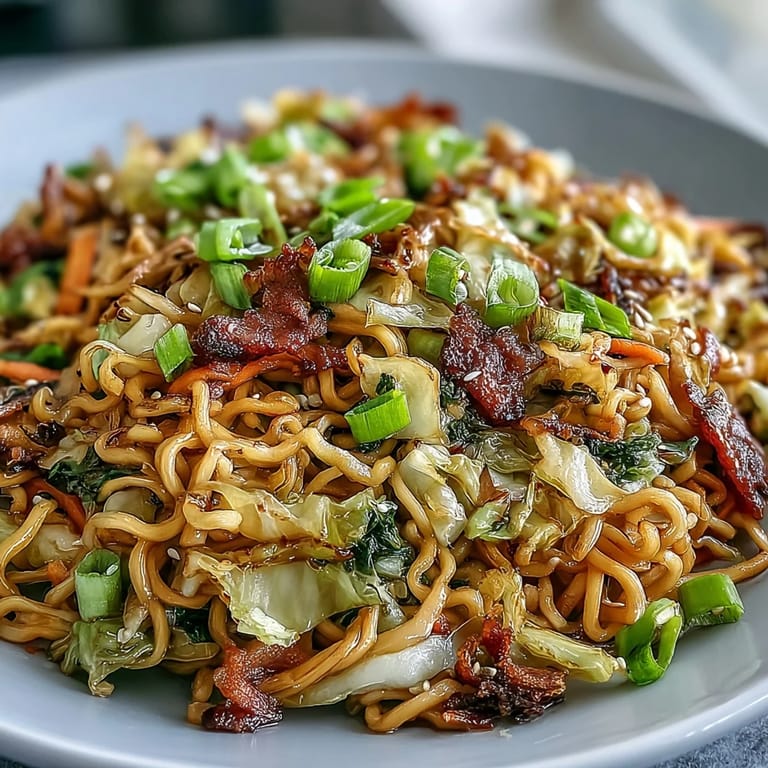
Save One night, my 8-year-old nephew watched me make this and asked why cabbage got so quiet when it cooked. I realized he meant how it shrinks and softens, how it goes from loud and leafy to something almost completely transformed. He actually sat down and ate a full bowl without complaint, and I saw it then—sometimes the simplest meals carry the most meaning because they show people you care enough to feed them well, even on ordinary days.
Texture Matters More Than You Think
The magic of this dish lives in contrast. The slightly charred edges of cabbage play against the chewiness of noodles, and that fresh scallion green at the end acts like a reset button for your palate. When everything melds together in that final toss, you get layers of sensation with every bite—something soft, something yielding, something fresh, something savory, all in one forkful.
Customizing Without Losing the Soul
This recipe is a framework, not a prison. I've added sliced mushrooms that get dark and meaty, thrown in snap peas for a different kind of crunch, even crumbled a fried egg into the top and let the yolk become part of the sauce. Every addition I've tried has felt right because the base—that perfect sauce-to-noodle ratio and high-heat cabbage—stays solid and forgiving.
Why This Beats Takeout
Beyond the obvious fact that you control exactly what goes into your food, homemade tastes better because it's warm when it reaches your mouth. There's no sogginess from the delivery bag, no mysterious oil sitting on top, no ordering hesitation. You make it fresh, you eat it fresh, and somehow that simplicity makes it taste more itself.
- Prep your vegetables the night before if mornings are chaotic—this turns the whole recipe into a 15-minute stovetop situation.
- Toast some sesame seeds or crush peanuts to scatter on top if you want extra crunch and a more restaurant-quality finish.
- Make a double batch and eat the leftovers cold tomorrow afternoon if you're the type who loves carb-heavy desk lunches.
 Save
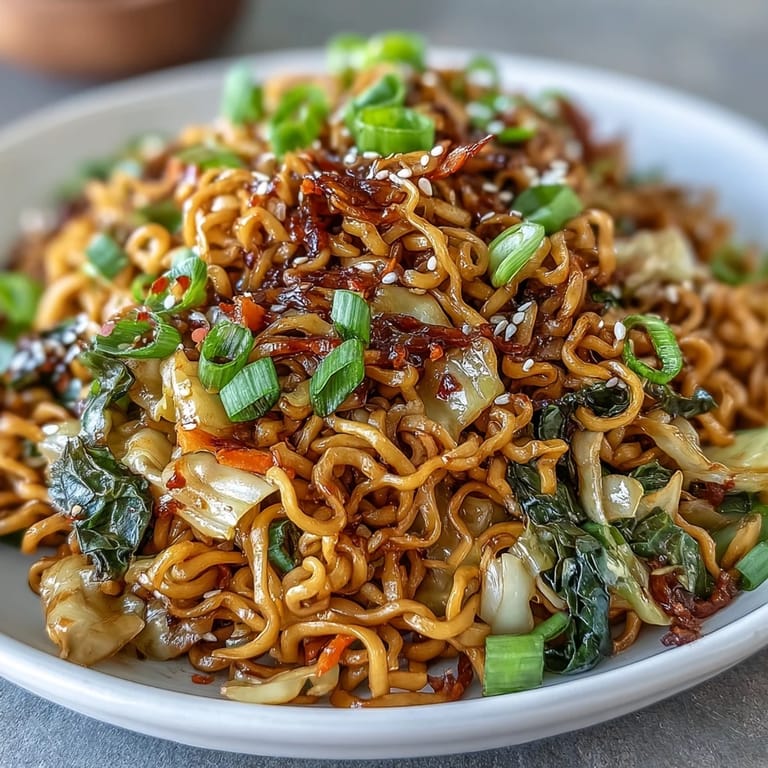
Save This is one of those meals that reminds me why I love cooking at home. It asks so little and gives back so much—speed, satisfaction, and the knowledge that what's on your plate is exactly what you intended.
Recipe Guide
- → Can I use fresh noodles instead of instant ramen?
Yes, fresh ramen noodles or any Asian-style wheat noodles work well. Cook according to package directions and drain before adding to the stir-fry.
- → How do I make this dish vegan?
Replace oyster sauce with mushroom sauce or additional soy sauce. Ensure all other ingredients are plant-based and check product labels for hidden animal products.
- → Can I prepare the sauce in advance?
Absolutely. Mix the sauce ingredients and store in an airtight container in the refrigerator for up to one week. Shake well before using.
- → What other vegetables work well in this stir-fry?
Bell peppers, snap peas, mushrooms, bok choy, and broccoli are excellent additions. Add them when cooking the cabbage for best results.
- → How do I prevent the cabbage from getting soggy?
Cook over high heat and avoid overcrowding the pan. Stir-fry in batches if needed, and cook just until tender-crisp with slight browning on the edges.
- → Can I make this ahead of time?
Best served immediately for optimal texture. If needed, store in the refrigerator for up to 2 days and reheat in a hot skillet to restore crispness.