 Save
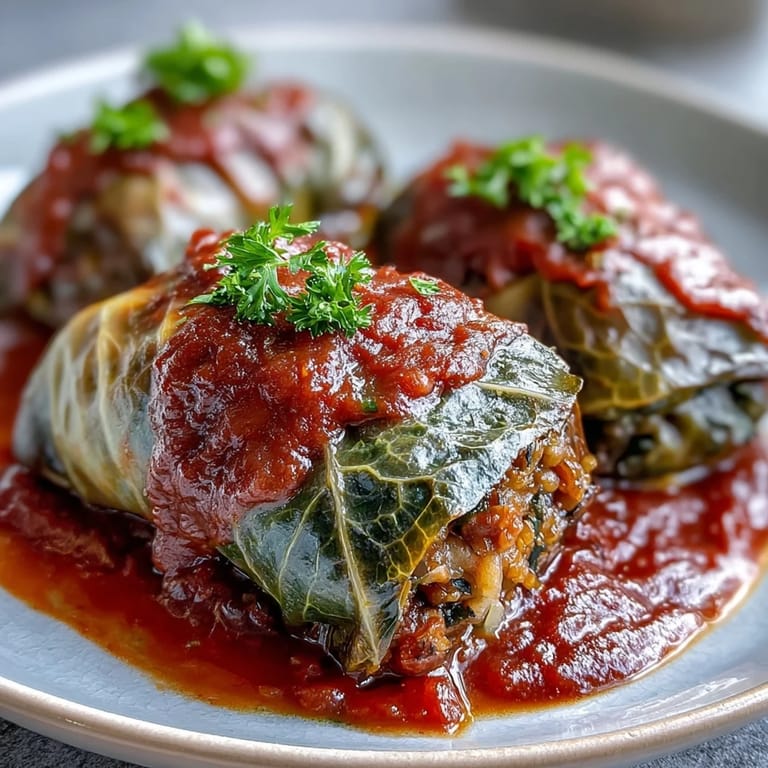
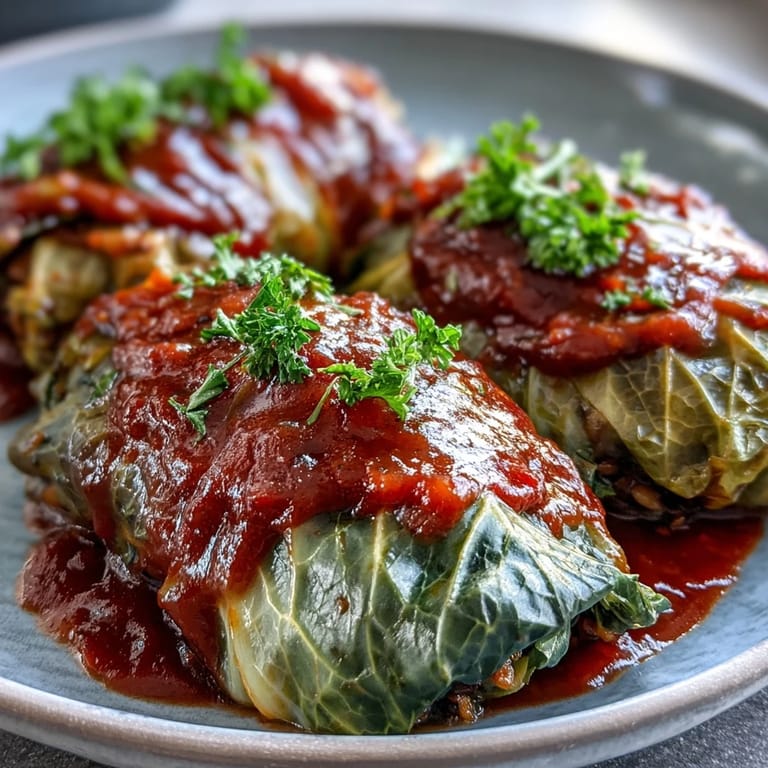
Save My friend Sarah showed up at my door one winter evening with a container of cabbage rolls her grandmother had made, and I watched her face light up as she described the earthy lentils and tender leaves tucked into that rich tomato sauce. Years later, when I went vegan, I realized I could recreate that same comfort without missing a thing—just swap the meat for hearty legumes and herbs. The first time I rolled these, my fingers fumbled with the leaves like I was wrapping presents for the first time, but by the third one, muscle memory kicked in and the whole process felt meditative. Now this dish has become my winter anchor, the kind of meal that fills your kitchen with warmth and makes everyone at the table feel cared for.
I made these for my partner's family dinner when I first went vegan, nervous they wouldn't understand my food choices. When everyone went back for seconds and asked for the recipe, I felt something shift—like I'd just shown them a version of love that didn't require animal products. That night taught me that good food transcends dietary labels, it just speaks for itself.
Ingredients
- 1 large head green cabbage: Look for one with loose, pliable leaves that won't crack when you blanch them; avoid heads that feel rock-hard or have brown spots on the outer leaves.
- 1 cup cooked brown rice: I always cook extra on Sunday and freeze it because it saves precious minutes on weeknight cooking.
- 1 cup cooked green or brown lentils: Brown lentils hold their shape better than red ones, which tend to turn mushy and lose their texture in the filling.
- 1 small onion, finely chopped: The smaller dice you manage here, the more evenly the flavors distribute throughout each roll.
- 2 cloves garlic, minced: Fresh minced is worth the five seconds it takes because jarred garlic can taste metallic if it sits in your pantry too long.
- 1 medium carrot, grated: Grating instead of dicing adds natural sweetness and helps bind the filling together without extra starch.
- 2 tbsp tomato paste: Use the kind in a tube if you can; it keeps longer and you won't waste half a can.
- 1 tbsp olive oil for the filling: Just enough to sauté without making the mixture greasy or heavy.
- 2 tbsp chopped fresh parsley: Fresh herbs make a visible difference in taste and appearance compared to dried.
- 1 tsp dried thyme: Thyme brings an earthy note that makes people ask what your secret ingredient is.
- 1 tsp smoked paprika: The smoke adds complexity that regular paprika simply cannot match.
- 1/2 tsp salt and 1/4 tsp black pepper: Season gradually as you mix the filling because it's easier to add more than to remove.
- 2 cups canned crushed tomatoes: San Marzano varieties tend to have fewer seeds and a smoother texture in the final sauce.
- 1 tbsp olive oil for the sauce: A separate amount keeps the flavors clean and distinct.
- 1 small onion for the sauce, finely chopped: This caramelizes differently than the filling onion, creating a deeper flavor base.
- 2 cloves garlic, minced: Don't skip this; the sauce deserves its own garlic presence.
- 1 tsp dried oregano: Oregano and tomatoes are old friends; this pairing has worked for centuries.
- 1 tsp sugar (optional): Canned tomatoes often need just a pinch to balance their acidity without tasting sweet.
Tired of Takeout? 🥡
Get 10 meals you can make faster than delivery arrives. Seriously.
One email. No spam. Unsubscribe anytime.
Instructions
- Heat your oven and prep your water:
- Set the oven to 375°F and fill a large pot with salted water, bringing it to a rolling boil. The saltiness helps season the cabbage leaves as they soften, not just cook them.
- Blanch the cabbage leaves:
- Peel back the outer leaves of your cabbage head like you're opening a flower, then gently lower eight to ten of them into the boiling water. They'll soften in about two to three minutes—watch them turn from stiff to silky, then fish them out with tongs and lay them on a clean towel to cool and drain.
- Build the filling foundation:
- Warm olive oil in a skillet and toss in your chopped onion and garlic, letting them sizzle and soften until the kitchen fills with that golden smell. Once they're translucent, stir in the carrot, tomato paste, thyme, paprika, salt, and pepper, cooking everything together for just two minutes to marry the flavors.
- Combine the filling:
- In a large bowl, fold together the sautéed mixture with your cooked rice, lentils, and fresh parsley. Taste it as you go and don't be shy about adjusting the seasonings; this is your filling's moment to shine.
- Create the tomato sauce:
- In a separate saucepan, heat another tablespoon of olive oil and sauté a fresh batch of onion and garlic until they're soft and fragrant. Pour in your crushed tomatoes along with oregano, a pinch of sugar if the tomatoes taste too sharp, salt, and pepper, then let everything bubble away for ten minutes.
- Prepare your baking dish:
- Spread half a cup of your warm tomato sauce across the bottom of your baking dish like you're creating a bed for the rolls to nestle into.
- Roll with intention:
- Lay a blanched cabbage leaf flat on your work surface, trim away any thick stem if it feels tough, then place about two to three tablespoons of filling near the base. Fold the sides in first, then roll away from you tightly like you're wrapping a burrito, and place each roll seam-side down in the dish so it stays sealed during baking.
- Cover with sauce and foil:
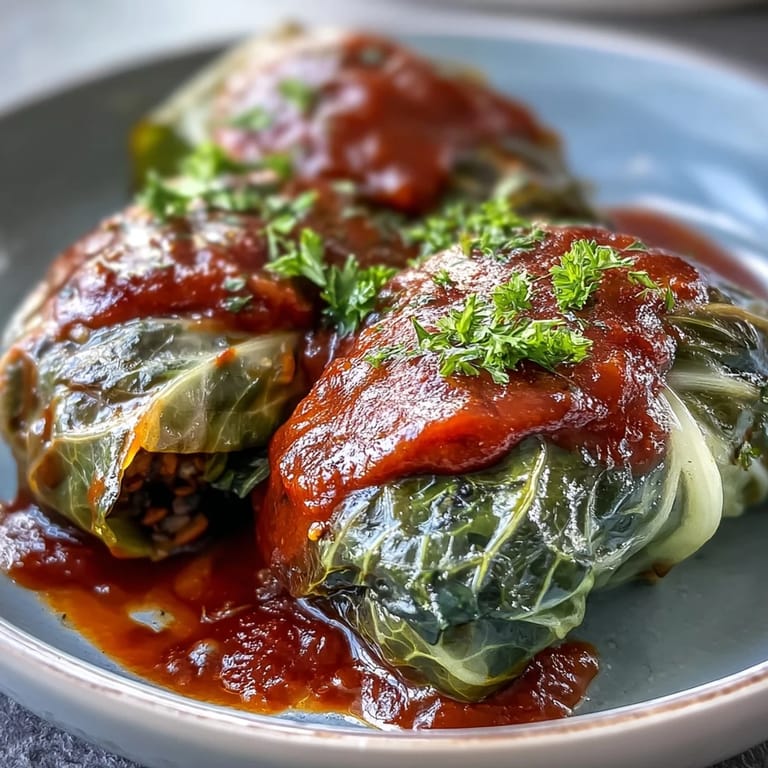
- Pour the remaining tomato sauce over all your rolls, making sure every seam gets nestled in that red blanket, then cover the whole dish tightly with foil to trap the steam.
- First bake phase:
- Slide the covered dish into your preheated oven for forty-five minutes, during which time the flavors will meld and the cabbage will become impossibly tender.
- Uncover and finish:
- Remove the foil and bake for another ten to fifteen minutes until the edges start to bubble and the top takes on a slightly deeper color. You're looking for that gentle bubble at the edges, not a violent boil.
- Rest before serving:
- Let the rolls cool for a few minutes so they hold their shape when you lift them onto a plate, then shower them with extra fresh parsley if the mood strikes you.
 Save
Save One quiet Tuesday, I made these rolls for a neighbor who'd just lost her mother, knowing her family was too tired to cook. When she hugged me at her door three days later, she told me these rolls reminded her of meals from her childhood, and suddenly I understood that cooking for people you care about is the most intimate language we have. Food carries memory, and sometimes a simple dish of cabbage and lentils can say everything you're struggling to put into words.
The Science of Softening Cabbage
When you blanch those cabbage leaves, you're not just making them pliable—you're breaking down the cell walls so the leaf becomes flexible without losing its structural integrity. I learned this the hard way after trying to roll raw cabbage and having it shatter like ancient parchment; now I treat the blanching as essential as gathering your ingredients. The brief soak in boiling salt water is really a miniature cooking process that prepares the leaf for its starring role without stealing any of the filling's thunder.
Building Layers of Flavor
This recipe works because it respects the principle of layering—you're cooking onions and garlic twice, in two separate preparations, and each time they develop slightly different characteristics. The first batch gets folded into the filling where they meld with the earthiness of lentils and rice, while the second batch becomes the aromatic foundation of your sauce. It's the difference between a one-note dish and something that makes you close your eyes and take another bite.
Making These Your Own
Once you understand the structure of this dish, you can improvise endlessly, and I encourage you to do exactly that. A handful of chopped mushrooms stirred into the filling adds an umami depth that makes people think you've been cooking since dawn, while swapping quinoa for brown rice bumps up the protein and gives you a slightly different texture. Keep crusty bread or mashed potatoes nearby because the sauce deserves to be sopped up and savored, and don't be surprised when people ask you to make these again and again.
- Mushrooms add savory depth that transforms the filling into something restaurant-quality.
- A splash of red wine stirred into the tomato sauce creates complexity that lingers on the palate.
- Let any leftovers cool completely, then freeze them in an airtight container for up to three months of future comfort.
 Save
Save These cabbage rolls prove that plant-based cooking isn't about deprivation—it's about celebration and intention. Every time you roll one of these, you're participating in a tradition that spans continents and generations, just in your own modern, compassionate way.
Recipe Guide
- → Can I prepare the cabbage rolls ahead of time?
Yes, you can assemble the rolls up to 24 hours in advance. Store them covered in the refrigerator with the sauce, then bake when ready to serve. Add 5-10 minutes to the cooking time if baking from cold.
- → What's the best way to soften cabbage leaves without tearing?
Blanch the leaves in boiling salted water for 2-3 minutes until pliable. If leaves tear, you can overlap two smaller pieces. Freezing the whole cabbage head overnight and thawing also makes leaves easier to separate and roll.
- → Can I substitute the lentils with another ingredient?
Absolutely. Try using cooked chickpeas, black beans, or crumbled firm tofu. For a grain-based version, use extra rice or quinoa mixed with finely chopped mushrooms for added texture and umami flavor.
- → How do I store and reheat leftovers?
Store cooled cabbage rolls in an airtight container in the refrigerator for up to 4 days. Reheat in a covered dish at 350°F for 15-20 minutes, or microwave individual portions. They also freeze well for up to 3 months.
- → What can I serve alongside these cabbage rolls?
These pair beautifully with crusty bread, mashed potatoes, or roasted root vegetables. A simple cucumber salad or pickled vegetables adds a refreshing contrast. For a complete meal, serve with a side of sautéed greens.
- → Can I make this dish gluten-free?
Yes, this dish is naturally gluten-free when using plain rice and lentils. Just verify that your tomato products and any packaged ingredients don't contain hidden gluten. Always check labels if you have celiac disease or severe sensitivity.