 Save
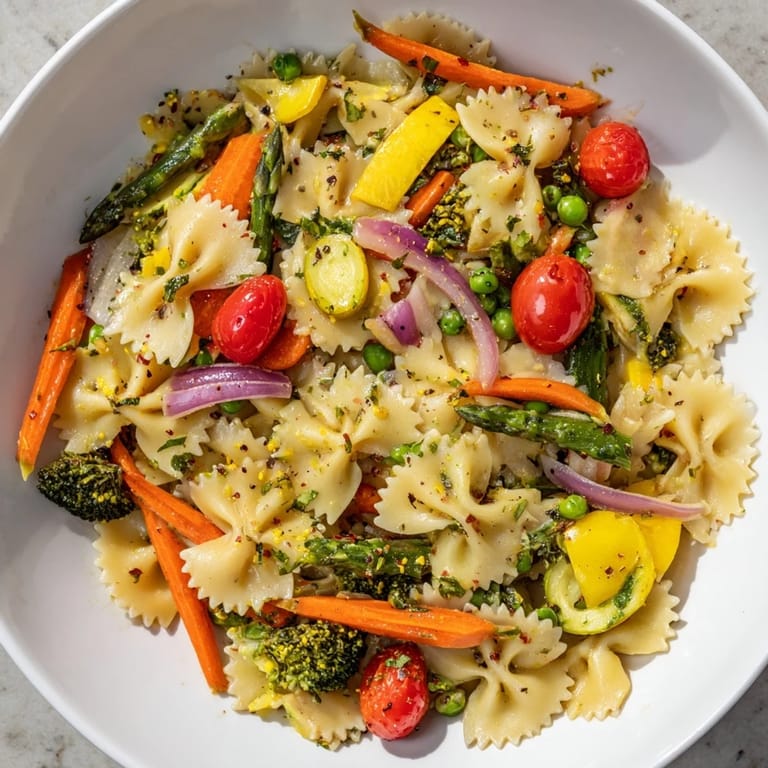
Save My neighbor knocked on the door one April afternoon holding a grocery bag overflowing with vegetables from her garden. She apologized for the excess, but I saw opportunity. I dumped everything onto the counter and stared at the riot of color, wondering how to do it justice without overthinking it. That night, I made this pasta, and the kitchen smelled like spring itself had moved in.
I started making this when I wanted to prove to my nephew that vegetables could actually be exciting. He picked out the red pepper and yellow squash himself at the market, and by the time we sat down to eat, he was too proud of his choices not to try them. He went back for seconds without me saying a word.
Ingredients
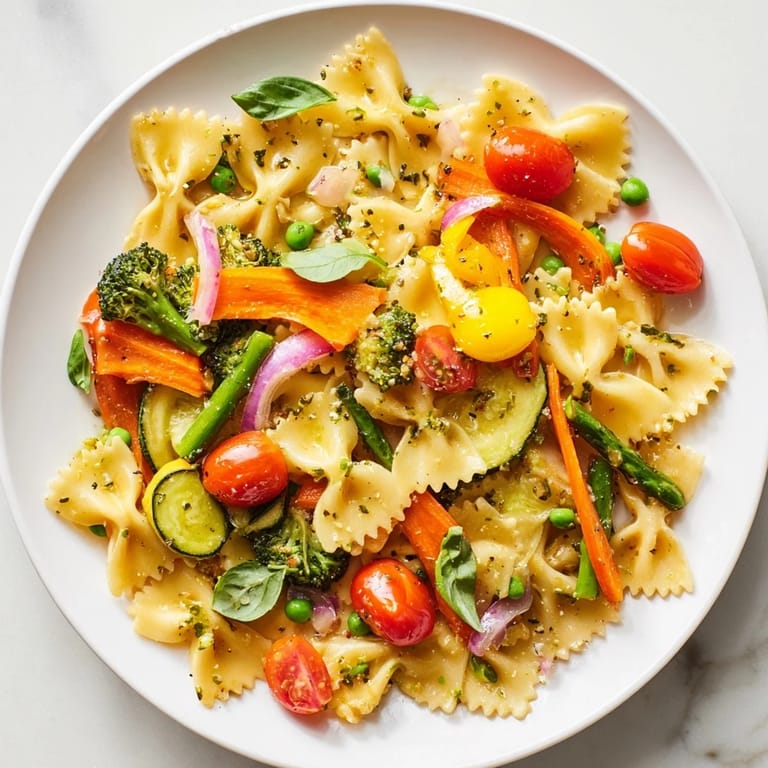
- Bow-tie pasta (340 g): Farfalle holds onto all the little vegetable pieces and the lemony oil in its folds, making every forkful balanced instead of the veggies sliding away.
- Cherry tomatoes (1 cup, halved): They burst just slightly when warmed, releasing sweet juice that becomes part of the sauce without any effort.
- Asparagus (1 cup, 1-inch pieces): Cut them on a bias so they look elegant and cook faster, and always use the tender tops first.
- Red bell pepper (1 cup, thinly sliced): Thin slices cook quickly and add a subtle sweetness that plays beautifully against the garlic and lemon.
- Yellow squash (1 cup, half-moons): It soaks up flavor like a sponge and adds a buttery texture without any actual butter.
- Broccoli florets (1 cup): Small florets cook evenly and get those crispy golden edges if your pan is hot enough.
- Carrots (1 cup, julienned): Thin strips cook in the same time as everything else and add a slight crunch that keeps the dish from feeling one-note.
- Red onion (1/2 cup, thinly sliced): It mellows as it cooks, adding a hint of sharpness without overpowering the brighter flavors.
- Frozen peas (1/2 cup): They thaw in seconds and add little pops of sweetness right at the end.
- Extra-virgin olive oil (3 tbsp): This is your sauce base, so use one you actually like the taste of, not something dusty from the back of the cupboard.
- Garlic (3 cloves, minced): Fresh garlic blooms in the oil and coats everything with warmth, but watch it closely so it doesnt burn and turn bitter.
- Crushed red pepper flakes (1/2 tsp, optional): Just a pinch gives the dish a gentle hum of heat that makes you take notice.
- Sea salt (1/2 tsp, plus more): Season as you go, tasting at every stage, because underseasoned vegetables taste like cardboard no matter how colorful they are.
- Black pepper (1/4 tsp, freshly ground): Freshly cracked pepper has a sharpness that pre-ground just cant match.
- Lemon zest (1 lemon): The zest adds bright, floral notes that wake everything up.
- Lemon juice (2 tbsp): The acidity cuts through the oil and brings all the flavors into focus.
- Parmesan cheese (1/4 cup, grated, optional): It melts slightly into the warm pasta and adds a salty, nutty finish.
- Fresh basil (2 tbsp, chopped): Basil tastes like summer and makes the whole dish smell like an Italian grandmas kitchen.
- Fresh parsley (2 tbsp, chopped): It adds a clean, grassy brightness right at the end.
Tired of Takeout? 🥡
Get 10 meals you can make faster than delivery arrives. Seriously.
One email. No spam. Unsubscribe anytime.
Instructions
- Boil the pasta:
- Get a large pot of salted water rolling at a hard boil, then cook the bow-tie pasta until its just al dente with a slight chew. Before you drain it, scoop out half a cup of that starchy pasta water, it will be your secret weapon for a silky sauce later.
- Start the garlic base:
- While the pasta bubbles away, heat 2 tablespoons of olive oil in a large skillet over medium heat and add the garlic and red pepper flakes. Let them sizzle for about a minute until your kitchen smells incredible, but pull them off the heat before the garlic turns brown.
- Cook the sturdy vegetables first:
- Toss in the carrots, broccoli, and asparagus, stirring them around for 3 to 4 minutes. They should start to soften but still have some bite, and the edges might pick up a little color.
- Add the softer vegetables:
- Now add the red onion, bell pepper, yellow squash, and a pinch of salt, cooking for another 3 to 4 minutes. Everything should be tender but still bright and alive, not limp or dull.
- Finish with tomatoes and peas:
- Stir in the cherry tomatoes and peas, cooking just long enough for them to warm through, about 2 minutes. The tomatoes should soften slightly but not completely fall apart.
- Bring it all together:
- Add the drained pasta to the skillet along with the remaining tablespoon of olive oil, lemon zest, and lemon juice, tossing everything together. If it looks dry, splash in some of that reserved pasta water a little at a time until the sauce clings to every piece.
- Taste and adjust:
- Season with more salt and black pepper, tasting as you go. This is your moment to make it yours.
- Garnish and serve:
- Pull the skillet off the heat and toss in the Parmesan, basil, and parsley. Serve it immediately while its still steaming, with extra herbs and cheese on the side for anyone who wants more.
 Save
Save I made this for a friend going through a rough week, and she sat at my kitchen table twirling her fork, quiet for a moment. Then she looked up and said it tasted like hope. I never forgot that, and now I make it whenever someone needs a little light.
Choosing Your Vegetables
The beauty of this dish is that its flexible, so if you dont have yellow squash, use zucchini, and if asparagus is out of season, try green beans or snap peas. Just keep the colors varied and the textures balanced, you want some crunch, some sweetness, and some tenderness all playing together. I once used purple cabbage because thats what I had, and it turned the whole dish a soft lavender, which was strange but delicious.
Making It a Full Meal
This pasta is satisfying on its own, but if youre feeding someone who insists on meat, grilled chicken or shrimp tossed in at the end works beautifully. I sometimes add a handful of toasted pine nuts or slivered almonds for a little richness and crunch. A crisp white wine on the side, something like Sauvignon Blanc or Pinot Grigio, makes it feel like a real occasion even on a Tuesday.
Storing and Reheating
Leftovers keep in the fridge for up to three days, though the vegetables lose a bit of their snap and the pasta soaks up the oil. I actually love it cold the next day, straight from the container, like a pasta salad that doesnt need any extra dressing. If you do reheat it, add a splash of water or olive oil in the pan and warm it gently so it doesnt dry out.
- Dont toss the herbs in until right before serving or they turn dark and lose their brightness.
- Use a big enough skillet so the vegetables have room to breathe and caramelize instead of steaming on top of each other.
- Taste the pasta water before you drain it, if its not salty enough to taste good on its own, your pasta will be bland no matter what you do.
 Save
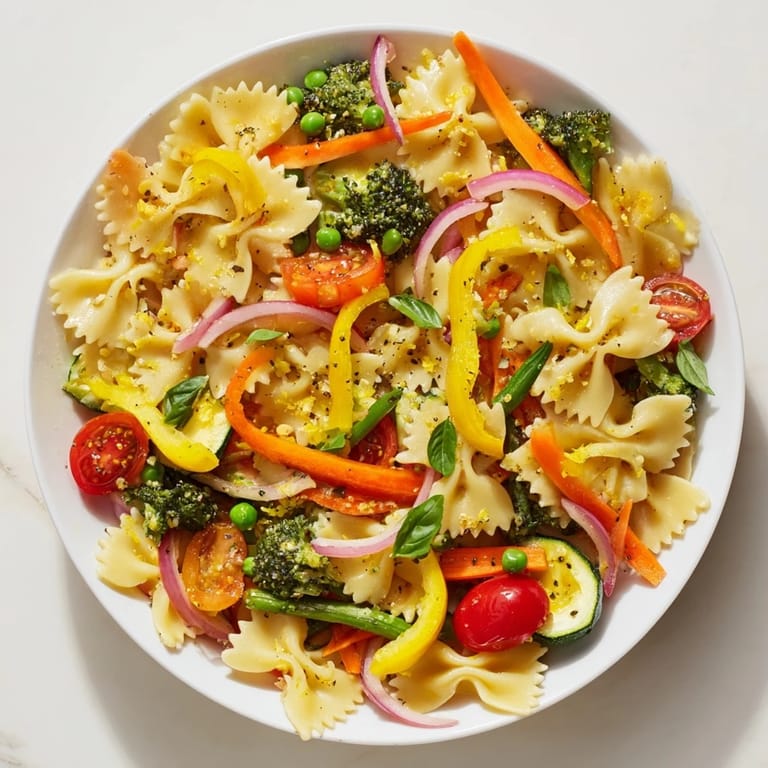
Save This is the kind of dish that reminds you cooking doesnt have to be complicated to be memorable. Make it once, and it will become the thing you turn to when you want something that feels like a celebration without any fuss.
Recipe Guide
- → How do I keep the vegetables vibrant and crisp?
Cook vegetables in stages by size, starting with denser vegetables like carrots and broccoli that need more time, then adding quicker-cooking items like bell pepper and tomatoes. Don't overcook—aim for tender but still colorful. This technique preserves both texture and visual appeal.
- → Can I prepare this dish in advance?
Cook pasta and vegetables separately, storing them in airtight containers for up to 2 days. Combine and warm gently before serving, adding fresh lemon juice and herbs just before plating to maintain brightness and prevent sogginess.
- → What makes the sauce silky without cream?
Reserved pasta water contains starch that emulsifies with olive oil, creating a naturally silky coating. Add it gradually while tossing—you want just enough to coat the pasta without creating excess liquid.
- → How do I adapt this for dietary restrictions?
For gluten-free, use certified gluten-free farfalle. For vegan, omit Parmesan or use nutritional yeast. For dairy-free, simply skip the cheese garnish. All variations maintain the dish's fresh, vegetable-forward character.
- → What vegetables can I substitute?
Any colorful spring or summer vegetable works—zucchini, snap peas, green beans, snow peas, cherry peppers, or eggplant. Cut similar-sized pieces for even cooking. Aim for a variety of colors and textures to maintain the dish's vibrant appeal.
- → What wine pairs best with this dish?
Crisp white wines like Sauvignon Blanc, Pinot Grigio, or Vermentino complement the bright lemon and fresh vegetables. Their acidity echoes the citrus notes while cutting through the olive oil richness.